Invader: A Scary-Cool Display Font for Bold Editorial Design
Invader in a Lifestyle Blog Redesign: Setting the Mood with Typography
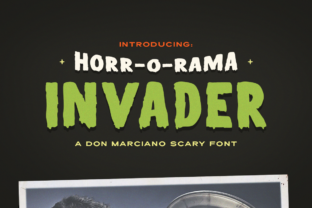
While working on a seasonal redesign for a personal lifestyle blog, I found myself scrolling through font libraries in search of something with character—something that could anchor a header without fading into the background. That’s when I came across Invader, a display font inspired by 60s horror film posters. It immediately caught my eye with its sharp edges, dramatic contrast, and a subtle sense of theatricality. The font has a distinct personality, and in a blog redesign, that kind of visual voice matters. I tested it in the header, paired with a clean sans serif for navigation, and it gave the site a fresh, memorable edge.
Using Invader for Ebook Covers and Digital Magazine Layouts
Fonts like Invader work best when they don’t just say something, but feel like something. When designing a cover for a digital magazine or a recipe ebook, the title is often the first—and sometimes only—visual hook a reader gets. I used Invader on a Halloween-themed recipe guide, and the result was instantly striking. Its bold, slightly eerie presence gave the layout a sense of curated atmosphere without being overwhelming. The font’s high contrast and open spacing made it readable even at a glance, and its unique letterforms gave the design a retro-cool edge that matched the content’s vibe.
Why Invader Works for Magazine Covers and Ebook Titles
The strength of Invader lies in its clarity as a display font. It’s not meant for long-form reading, but when used at larger sizes—like for titles, headers, or pull quotes—it shines. The font’s rhythm is consistent, and its letterforms are distinctive without being distracting. This makes it ideal for magazine covers, editorial features, or branded content where typography needs to command attention while still supporting readability.
Invader in Printables and Planner Design: Balancing Style and Function
When designing a printable planner for a coaching client, I wanted a font that would stand out in section headers and motivational quotes without competing with the functional elements. I tested Invader in a few key spots—like the title page and weekly focus prompts—and found that it worked beautifully in moderation. Used sparingly, it added a touch of editorial flair without compromising the document’s usability. For body text and checkboxes, I paired it with a soft serif font, creating a balanced visual hierarchy that felt intentional and reader-friendly.
What to Avoid When Using Invader in Editorial Layouts
Despite its visual appeal, Invader isn’t suited for every application. It’s a display font through and through, which means it struggles in dense paragraphs or small captions. I tried using it in a newsletter subheader once, but on mobile screens, the finer details got lost. Similarly, in formal reports or academic-style layouts, its expressive style felt out of place. The key is knowing when to use it—sparingly, boldly, and contextually.
Pairing Invader with Other Fonts for a Cohesive Editorial Identity
One of the joys of working with display fonts like Invader is experimenting with font pairings. I’ve found that pairing it with a classic serif font like Georgia or a minimalist sans serif like Lato creates a compelling contrast that enhances readability and visual flow. In a recent digital magazine layout, I used Invader for feature headlines and a crisp sans serif for subheadings and body text. The result was a layered, dynamic layout that felt both editorial and accessible.
Checking Licensing and Font Features Before Use
Before committing to Invader for a client project or a digital product like a printable planner or course PDF, I always double-check the font’s licensing terms. It’s essential to ensure the font can be embedded in PDFs, used in web design, or included in templates intended for resale. I also look for additional features like alternates, ligatures, and multilingual support, especially if the content will be used across different platforms or audiences. Most versions of Invader come with multiple file formats and clear licensing, making it a solid choice for commercial use.